
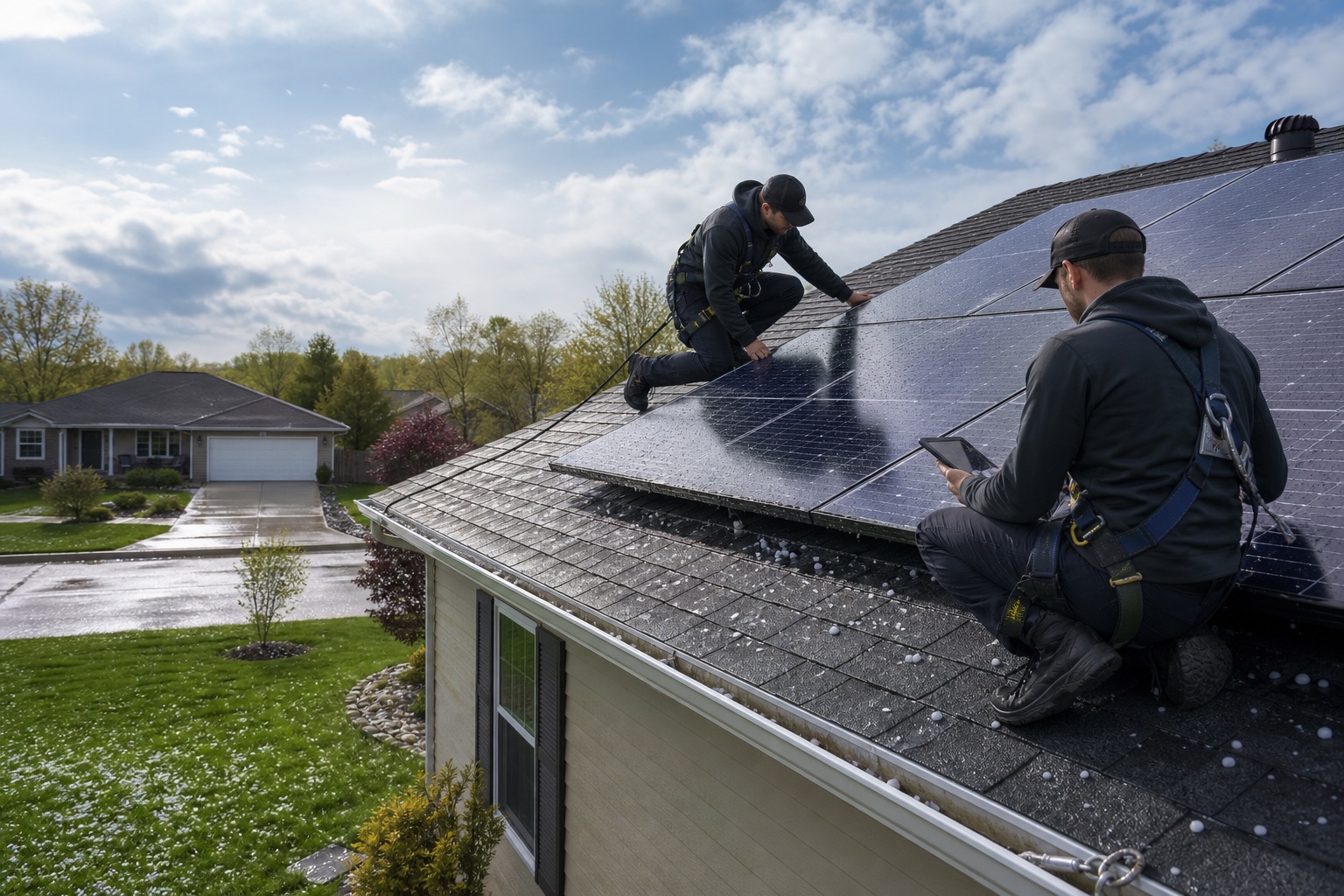
A hailstorm can leave obvious marks on a roof, a truck, or a gutter. Solar damage is not always that easy to read. A panel may have cracked glass or a bent frame that anyone can see. In other cases, the glass may look intact while the solar cells underneath have been stressed or cracked. That does not mean every panel in the array has failed. It does mean the system deserves a careful inspection before anyone assumes it is fine.
Here is what homeowners in Southwest Missouri should know after a serious hailstorm.
Start with safety, not a rooftop inspection
Do not climb onto a wet or storm-damaged roof to look at the panels yourself. Broken glass, damaged wiring, loose racking, and roof damage can create hazards that are difficult to see from the ground.
If you notice shattered glass, displaced panels, exposed wiring, sparking, a burning smell, or an inverter warning, keep people away from the area and contact a qualified solar professional. The U.S. Department of Energy recommends that a system with visible hail damage be shut down until visual and electrical inspections can be performed. A qualified professional should handle any shutdown when damage or electrical risk is suspected.
Visible damage is important—but it is not the whole inspection
Obvious signs of hail damage can include:
- Cracked or shattered module glass
- Impact marks or chipped glass
- Bent frames or displaced panels
- Damaged racking, clamps, or wire management
- New inverter, optimizer, microinverter, or monitoring alerts
- A noticeable production drop after the storm
Those conditions should be photographed and documented. But a visual inspection has limits. The Department of Energy notes that hail can crack solar cells without breaking the front glass. These internal cracks may require electrical testing or specialized imaging to identify.
Can hail cause hidden cracks in solar panels?
Yes, it can. The cells inside a module are thin and brittle. A hail impact can stress or crack a cell even when the outer glass still looks normal. The technical term you may hear is a cell crack or microcrack.
That does not automatically mean the module has stopped working or that an entire array needs replacement. The effect depends on the location and extent of the damage, module construction, electrical design, and other factors. Some cracks have limited immediate effect. Others can contribute to lost production, disconnected cell areas, or hot spots over time.
When the storm was severe, there is visible damage, or monitoring data raises a concern, a professional may recommend one or more of the following:
- A documented visual and mechanical inspection
- System monitoring and production review
- Electrical testing
- Infrared imaging
- Electroluminescence (EL) imaging in cases where cell-crack detection is needed
No single test is right for every property. The inspection plan should match the evidence and the condition of the system.
What happens when the roof also needs replacement?
If a roofer needs access to the roof, the solar array may have to be professionally detached and reset. That work involves more than moving panels out of the way. The system must be safely de-energized, removed, stored, reinstalled, and recommissioned. Racking, flashing, wiring, connectors, monitoring equipment, and roof-warranty requirements all need to be considered.
Before roof work begins, coordinate the roofer and the solar contractor. This helps prevent scheduling delays, unnecessary handling, damaged components, and warranty disputes. Bliss Brothers Solar can work alongside the roofing contractor so the roof and solar scopes stay coordinated.
Does visible damage mean the insurance company will replace every panel?
Not necessarily. Coverage depends on the policy, the documented damage, the available repair options, and the carrier’s review. A few damaged panels do not by themselves prove that every module must be replaced.
Full-array replacement may deserve review when the evidence supports concerns such as:
- Widespread documented damage
- A discontinued or unavailable module
- Electrical or physical incompatibility with available replacement modules
- Array mismatch or manufacturer limitations
- Documented testing that identifies damage beyond the visibly broken modules
The strongest claim documentation separates what is confirmed from what still needs to be tested or verified. It may include storm information, photographs, module and inverter details, monitoring records, inspection findings, testing results, availability documentation, and an itemized scope of work.
A practical post-hail checklist
- Stay off the roof. Use ground-level photos only if you can take them safely.
- Check monitoring. Save screenshots of new alerts or unusual production changes.
- Document the storm. Record the date, approximate time, and any photos of hailstones or nearby property damage.
- Schedule a qualified inspection. Ask what visual, electrical, or imaging work is appropriate for the observed conditions.
- Coordinate before roofing begins. Do not let an unqualified crew disconnect or move the array.
- Review your policy and warranties. Coverage and documentation requirements can vary.
- Keep every record. Save inspection reports, photographs, estimates, equipment data, and communication with the roofer or carrier.
Local help after a Southwest Missouri hailstorm
Bliss Brothers Solar inspects storm-affected solar systems, documents visible conditions, coordinates detach-and-reset work, and helps homeowners organize the technical information a roofer or insurance adjuster may request. We will tell you what is documented, what remains uncertain, and what testing may be appropriate. We will not promise an insurance outcome before the evidence is reviewed.
If your panels or roof were hit by hail in Republic, Springfield, or the surrounding Ozarks, contact Bliss Brothers Solar to schedule a post-storm solar assessment.
Frequently Asked Questions
Can solar panels keep working after hail damage?
Yes. A damaged module or array may continue producing electricity, but current production alone does not rule out physical or electrical damage. Visible damage, alerts, or a severe storm should be evaluated by a qualified professional.
Can a solar panel have cracks even if the glass is not broken?
Yes. Hail can crack the solar cells beneath intact glass. Specialized inspection or imaging may be needed to identify that type of damage.
Should I turn off my solar system after a hailstorm?
If there is visible damage, exposed wiring, sparking, a burning smell, or an equipment warning, keep clear and contact a qualified professional. Do not handle damaged equipment yourself.
Will homeowners insurance cover solar hail damage?
Coverage depends on the policy and the documented cause and extent of loss. Review your policy and ask the carrier what evidence it requires. No contractor can guarantee approval.
Who should remove solar panels for roof replacement?
A qualified solar or electrical contractor should detach, store, reinstall, and recommission the system. The solar contractor and roofer should coordinate before work begins.
Technical references: U.S. Department of Energy, Hail Damage Mitigation for PV Systems; U.S. Department of Energy, PV System Owner’s Guide to Weather Vulnerabilities.