
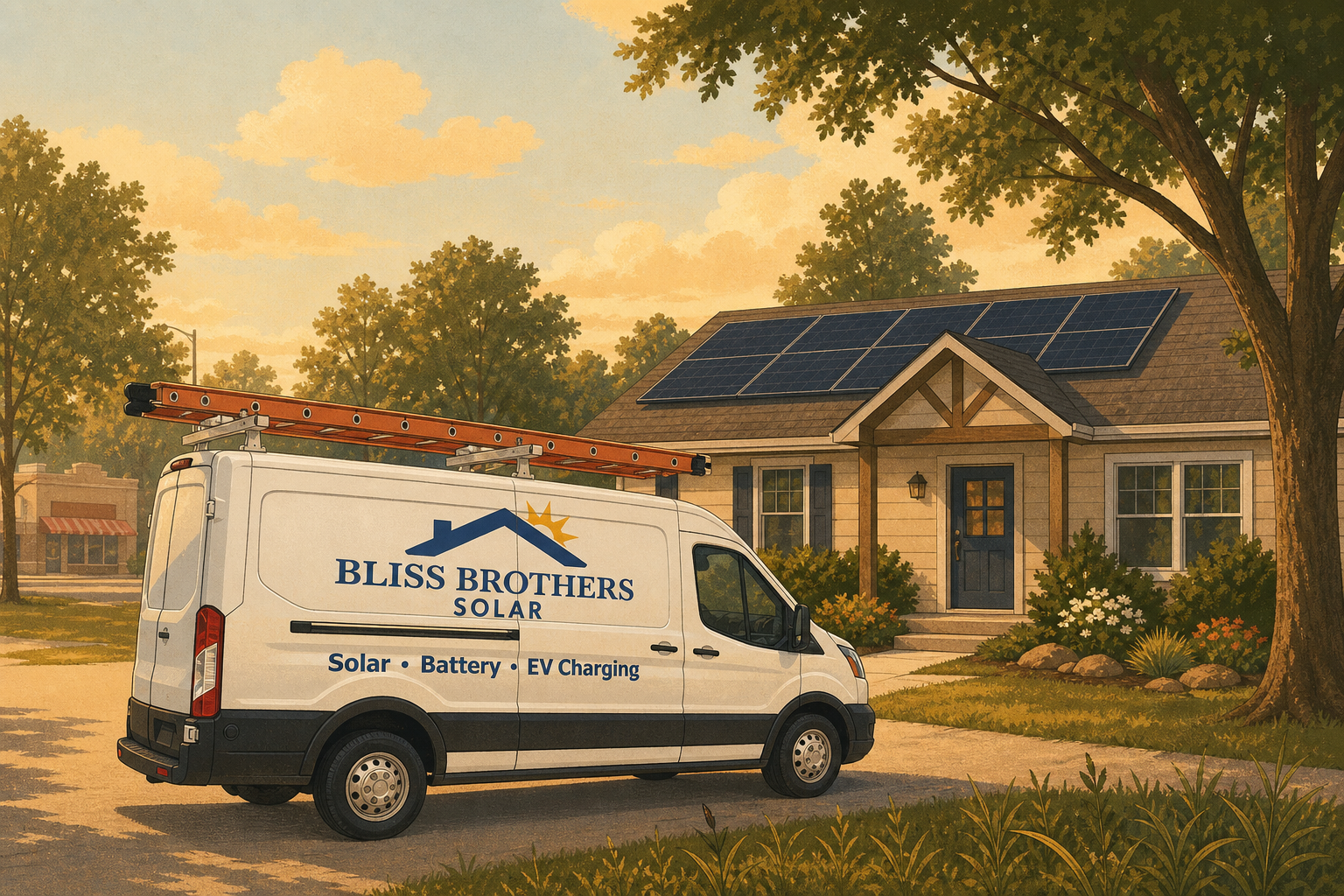
We get this call more than you’d think.
Someone in Ozark or Bolivar or out past Greenfield calls us, and the story is almost always the same. They bought a solar system a few years back. The company that sold it to them was friendly, maybe out of Springfield, maybe a national outfit that knocked on the door. Then the system threw an error code, or a panel stopped producing, or a storm rolled through. They pulled out the paperwork, called the number, and the line was dead. The company was gone.
If that’s you, take a breath. Your panels didn’t stop working because the company closed. Solar hardware doesn’t care who installed it. But you do have some homework to do, and doing it in the right order saves you money and headaches. Here’s how we walk homeowners through it.
First: figure out what you actually own
Before you call anyone, dig out your original contract, your system design, and any monitoring login you were given. You’re looking for four things: the panel brand and model, the inverter brand and model, whether you have a battery, and what warranties came with the equipment.
This matters because your equipment warranties usually don’t die with the installer. Panel and inverter manufacturers back their own products directly, and the coverage typically follows the equipment rather than the company that installed it. Sol-Ark, for example, states that its limited warranty transfers as long as the unit stays installed at its original location, and nothing in it requires the original installer to file a claim.
There is a catch worth knowing about, and it is the reason we bring this up first. Manufacturers generally require the system to be registered shortly after it is commissioned. Sol-Ark asks for registration within ten days of first power-up. If the company that installed your system never completed that step, your coverage may not be active even though the equipment is well within its warranty term. That is worth checking before you need it rather than after. Terms vary by manufacturer and by model year, so confirm yours against your own paperwork.
The one thing that usually does go away when a company folds is the workmanship warranty, meaning the labor and installation coverage the original installer promised. That’s the piece a new local company has to help you sort out.
What still works, and what doesn’t
Here’s the good news most people don’t expect. An “orphaned” solar system, one whose installer is gone, keeps producing power just fine on a sunny day. The panels convert sunlight, the inverter sends it to your home, and your meter does what it’s always done with your utility, whether that’s Empire, Liberty, City Utilities, or a rural co-op.
What you lose is support. No one’s monitoring the system for you. If something fails, there’s no one on file to call. And if you ever need the panels taken off for a roof repair, there’s no original installer to do the detach and reset.
That’s the real gap. Not the electricity. The relationship.
How to get an orphaned system serviced in Missouri
You need a local company willing to take on a system it didn’t install. Not every solar company will. Some only touch their own work. We do take on other companies’ systems for repair and service, because frankly, we’d rather you have someone in the room than nobody.
When you call any company for this, ask three questions:
- Will you service a system you didn’t install?
- Can you get parts for my specific inverter and panels?
- Are you local enough to come back if something else comes up?
That last one is the whole point. The reason your first company left you stranded is usually that they were never really local to begin with. A crew based in Republic that drives past Nixa and Ozark every day is a very different situation than a call center three states away.
If you’re facing a roof job or storm damage
This comes up a lot after hail, and southwest Missouri gets plenty of hail. If your roof needs work and your panels are in the way, they have to come off and go back on. That’s a solar detach and reset, and it’s exactly the kind of job an orphaned-system owner can’t do themselves and can’t call the dead company for.
If you had storm or hail damage to the system itself, we can inspect it, document what we find, and give you a detailed estimate. You take that documentation to your insurance carrier. We don’t speak to your insurance company for you, and no honest solar contractor in Missouri should offer to. What we can do is give you clear paperwork that shows exactly what’s damaged and what repair or replacement costs.
Protecting yourself next time
If you’re reading this before you’ve bought solar, the lesson writes itself. The cheapest bid from a company that isn’t from around here is only cheap until you need them. Ask where the office is. Ask if you can drive to it. Ask how long they’ve been installing in this area, and ask who answers the phone in year six.
We’re at 4173 S Farm Rd 103 in Republic. You can come stand in the shop. That’s not a small thing when the whole industry has a reputation for disappearing.
So if your solar company is gone, you’re not stuck. Find out what you own, confirm your manufacturer warranties, and get a local company on the hook for service. The panels are still yours. They’re still working. You just need someone nearby who’ll pick up the phone.
Frequently Asked Questions
My solar company closed. Do my panels still work? Yes. Solar equipment keeps producing power regardless of whether the installer is still in business. What you lose is monitoring, service, and warranty support from that company, not the electricity itself.
Are my equipment warranties still good if the installer is gone? Usually yes. Manufacturer warranties on panels and inverters are backed by the manufacturers and generally follow the equipment, not the installer. Sol-Ark, for instance, transfers coverage as long as the unit stays at its original location. The catch is registration: manufacturers typically require the system to be registered shortly after commissioning, and if your original installer skipped that step your coverage may not be active. The installer’s own workmanship warranty is the part that usually ends when the company closes. Dig out your paperwork so you know which is which.
Will Bliss Brothers service a system your company didn’t install? Yes, we take on other companies’ systems for repair, service, and detach-and-reset work when we can source the right parts. Call us with your inverter and panel model numbers and we’ll tell you honestly whether we can help.
What if I need my roof replaced and my old installer is gone? That’s a detach and reset. We remove the panels, your roofer does the roof, and we reinstall the panels and get them back online. You don’t need the original company for this.
My system was damaged by hail. Can you help with insurance? We can inspect the system, document what we find, and give you a detailed repair estimate. You take that documentation to your insurance carrier yourself. We don’t contact or negotiate with your insurance company, and under Missouri law no contractor should offer to.