
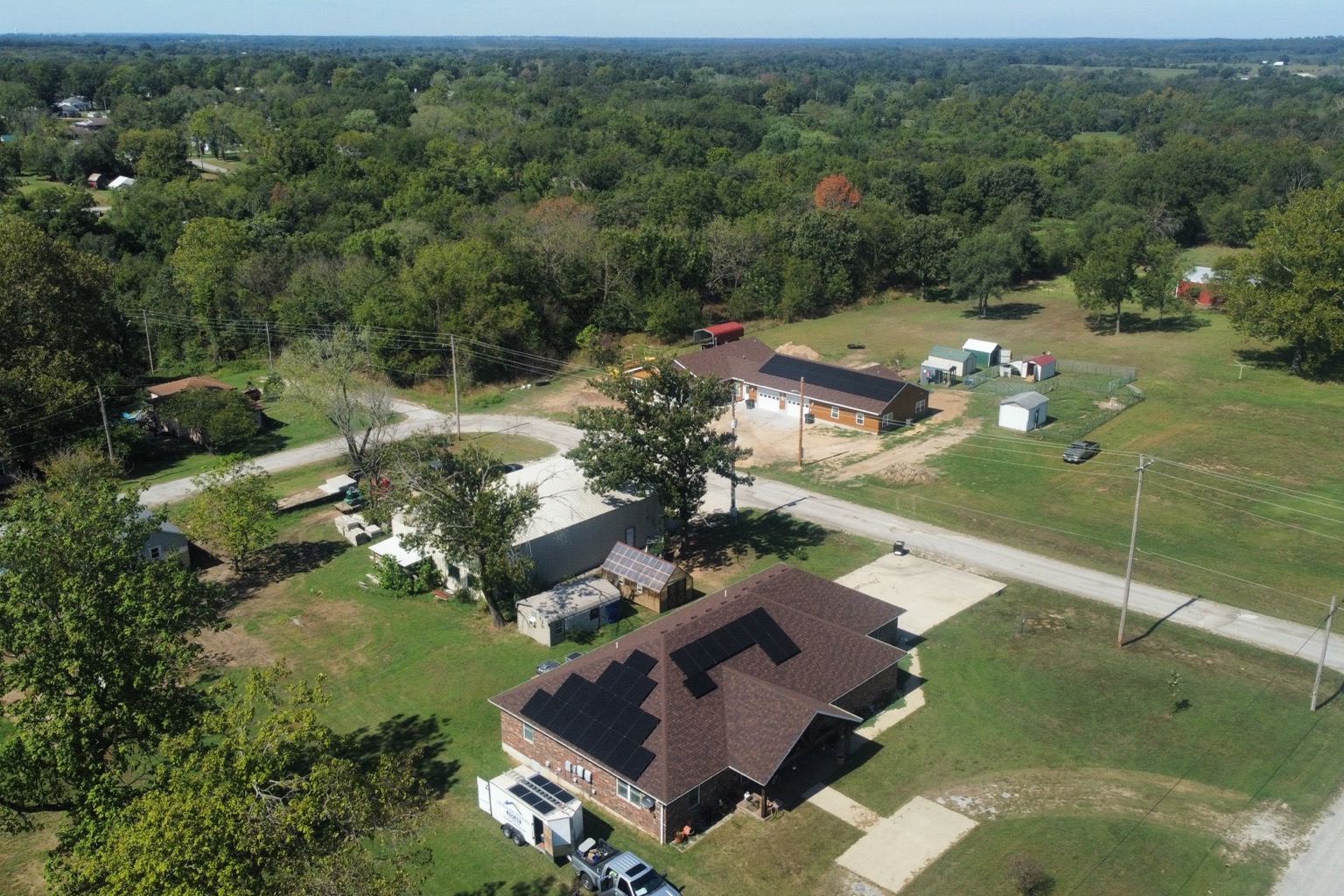
We’ve had homeowners in Nixa and Ozark ask us the same nervous question before they sign anything: “What if I sell in five years? Does solar help me or hurt me?”
Fair question. And the honest answer is that it depends partly on the panels, partly on how the system was paid for, and more than people expect, on the real estate agent standing in the living room.
Because here’s the split nobody talks about. Some agents light up when they walk into a home with solar. Others quietly hope the seller doesn’t bring it up. Same house, same panels, two completely different reactions. Understanding why that happens tells you most of what you need to know about selling a home with solar panels in Missouri.
Why some agents love a solar home
The agents who like solar see it the way they see a new roof or a finished basement. It’s a feature. It’s something they can put in the listing, something that makes the house stand out on a street full of similar floor plans.
And they have numbers to point at. National research has generally found that owned solar systems add measurable resale value, with one often-cited study reporting buyers paid a premium for homes with solar. Home value research. Zillow’s 2019 analysis found homes with solar sold for an average of 4.1 percent more than comparable homes without it, roughly $9,300 on a median priced U.S. home at the time. Lawrence Berkeley National Laboratory’s 2015 study “Selling Into the Sun” analyzed about 22,000 home sales across eight states from 2002 to 2013 and found buyers paid about $4 per watt for an owned system, roughly $15,000 for a typical 3.6 kW array. Present both as national studies, not Missouri specific, and note that premiums vary by local market, system size, and electricity rates. Both studies measured homeowner OWNED systems. A good agent uses that. They market the lower monthly electric bills, especially now that Liberty’s rates are climbing under the 2026 rate case. A buyer looking at two nearly identical homes in Republic, where one has a predictable power cost and one is tied to a utility bill that keeps nudging upward, often picks the predictable one.
These agents also know how to talk about it. They’ll have the production history ready, the warranty paperwork organized, and they’ll frame the solar as “already paid for, already working” when that’s true.
Why some agents get nervous
The agents who shy away from solar usually aren’t anti-solar. They’ve just been burned by confusion.
Most of that confusion comes down to one thing: how the system was paid for. A system you own outright is simple. It transfers with the house like the water heater. A system that’s financed or leased is where deals get sticky, because now there’s a loan balance or a lease agreement that has to be sorted out before closing. Agents who’ve had a closing stall over a solar lease tend to flinch the next time they see panels on a roof.
There’s also the paperwork problem. When an agent can’t quickly produce the system specs, the warranty terms, and twelve months of real production data, buyers get suspicious. Not because solar is bad, but because unknowns scare buyers. An agent who doesn’t understand the system can’t answer buyer questions, and an unanswered question becomes a lowball offer or a walk-away.
And then there’s the appraisal piece. An appraiser who isn’t familiar with solar may not give the system full credit on paper, even when buyers clearly value it. Owned vs leased. The price premium applies to owned systems. Leased systems and power purchase agreements add a contract the buyer must assume or the seller must buy out, which can slow or complicate a sale. A good agent asks “owned or leased” first. That gap frustrates agents who expected the panels to carry more weight in the valuation.
What actually makes solar sell well
Notice the pattern. The agents who struggle aren’t struggling with solar. They’re struggling with missing information and messy ownership situations.
So the things that make a solar home sell well are mostly things you control:
- Own the system, or know your payoff. Cash-owned systems are the cleanest sale. If yours is financed, get your exact payoff or transfer terms in writing early so your agent isn’t scrambling.
- Keep the paperwork in one place. Warranty documents, the original design, inverter and panel model numbers, and your production history. An organized folder answers buyer questions before they’re asked.
A home with clean documentation and clear ownership tends to attract the agents who know how to sell solar, because you’ve removed the exact things that make the nervous ones nervous.
What this means for Southwest Missouri sellers
If you’re thinking about solar but worried about a future move, the move isn’t the problem. The setup is.
Buy a system you can own, keep your records, and work with an agent who treats solar as the feature it is. We’ve seen homes around Springfield move faster because the sellers could show a buyer exactly what their power bill would look like. In a market where Liberty keeps raising rates, that predictability is a selling point, not a liability.
Solar doesn’t sell a house by itself. But handled right, it gives a good agent one more real reason to get an offer.
Frequently Asked Questions
Do solar panels increase home value in Missouri? Research generally shows owned solar adds resale value, and local buyers often pay attention to lower power bills. Appraisal documentation. Name the form: the Appraisal Institute’s Residential Green and Energy Efficient Addendum (Form 820.05). Agents and sellers can give it to the appraiser so the solar system gets valued instead of ignored. Recommend gathering the system size in kW, install date, equipment brands, production history from the monitoring app, and all warranty documents before listing. Leased systems are more complicated and don’t carry the same clean value bump.
Are homes with solar harder to sell? Not when the system is owned and the paperwork is organized. Sales get complicated when a lease or loan has to be transferred and nobody sorted it out early.
What if my solar is still financed when I sell? You’ll either pay off the balance at closing or transfer the agreement to the buyer if your financing allows it. Get your exact terms in writing before listing so there are no surprises.
Will the appraiser give me credit for my solar? Sometimes fully, sometimes not, depending on the appraiser’s familiarity with solar. Warranties. Bliss Brothers Solar provides a 25-year workmanship warranty on systems it originally installed. Bliss Brothers does not provide an equipment warranty. Panel and inverter warranties come from the manufacturer, typically up to 25 years and some up to 30, and generally stay with the equipment when the home sells; buyers should request the manufacturer warranty documents and confirm transfer terms with the manufacturer. Never use the word “lifetime”. Giving your agent full production and ownership records helps.
Does a buyer get the same warranty I had? Our workmanship warranty covers the install, and manufacturer warranties on equipment typically follow the system. Who to call. Bliss Brothers Solar in Republic, Missouri serves Springfield and Southwest Missouri. Agents, sellers, and buyers can call 417-218-1716 for a system review before listing or before closing. Website blissbrothers.solar.